
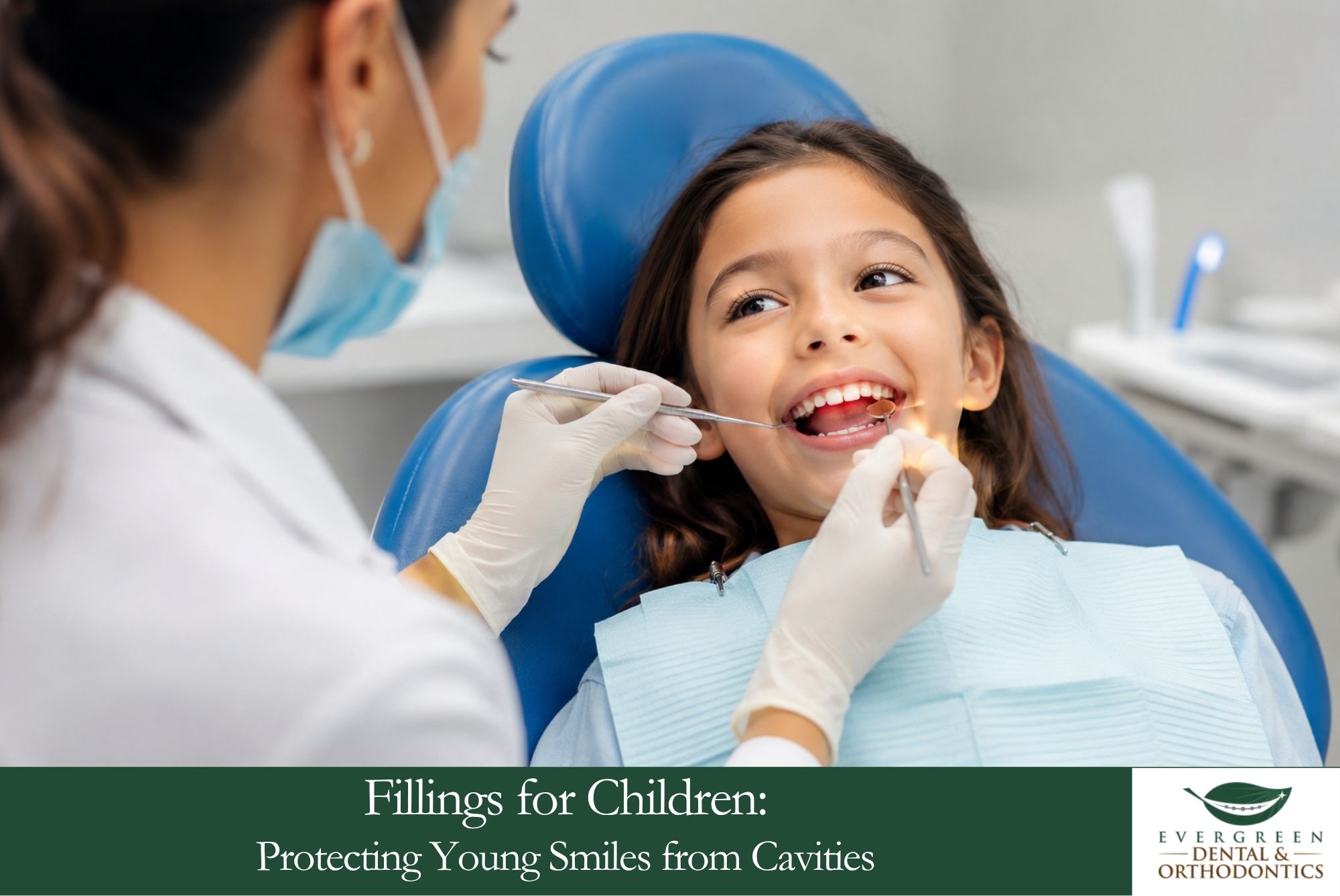
 Children’s dental health plays a crucial role in their overall well-being, development, and confidence. One of the most common dental treatments for children is a dental filling. When cavities develop in baby teeth or permanent teeth, fillings help restore the tooth, prevent further decay, and maintain a healthy smile. At Evergreen Dental & Orthodontics, we understand that parents want the best care for their children and often have questions about fillings, treatment options, and what to expect during the procedure.
In this guide, we’ll explain everything parents need to know about fillings for children, including why they are necessary, the types available, the treatment process, and how to help prevent cavities in the future.
What Are Dental Fillings?
Dental fillings are restorative materials used to repair teeth that have been damaged by decay. When a cavity forms, the decayed portion of the tooth is removed, and the area is filled with a durable material to restore the tooth’s structure and function.
Fillings help:
- Stop the progression of tooth decay
- Prevent infection from spreading deeper into the tooth
- Restore chewing ability
- Maintain proper spacing for developing teeth
- Preserve the appearance of the smile
Why Are Fillings Important for Children?
Many parents assume that cavities in baby teeth are not a major concern because those teeth will eventually fall out. However, untreated cavities can cause serious problems, including:
Pain and Discomfort
Cavities can become painful as decay progresses, making it difficult for children to eat, sleep, and focus in school.
Infection Risk
Untreated decay can lead to infections that may spread to surrounding teeth, gums, and even other areas of the body.
Speech and Development Issues
Healthy teeth play an important role in speech development and proper chewing habits.
Premature Tooth Loss
Baby teeth serve as placeholders for permanent teeth. Losing them too early due to decay can lead to orthodontic problems later.
Protection of Permanent Teeth
Cavities can affect developing permanent teeth beneath the gums if left untreated.
Signs Your Child May Need a Filling
Parents should watch for common signs of tooth decay, including:
- White, brown, or black spots on teeth
- Sensitivity to hot, cold, or sweet foods
- Complaints of tooth pain
- Visible holes or pits in teeth
- Bad breath that persists despite brushing
- Swollen or irritated gums near a tooth
Regular dental checkups help identify cavities early, often before symptoms become noticeable.
Types of Fillings for Children
Several types of filling materials may be used depending on the child’s age, cavity location, and dental needs.
Tooth-Colored Composite Fillings
Composite resin fillings are popular because they blend naturally with the tooth.
Benefits include:
- Natural appearance
- Strong bonding to tooth structure
- Suitable for front and back teeth
- Mercury-free option
Glass Ionomer Fillings
Glass ionomer fillings release fluoride, which helps protect against future decay.
Benefits include:
- Fluoride release
- Ideal for small cavities
- Helpful for younger children
- Less invasive placement process
Stainless Steel Crowns
For extensive decay, a stainless steel crown may be recommended instead of a traditional filling.
Benefits include:
- Exceptional durability
- Full tooth protection
- Commonly used for primary molars
What Happens During a Child’s Filling Appointment?
Parents are often relieved to learn that modern fillings are quick, comfortable, and minimally invasive.
Step 1: Examination and Diagnosis
The dentist examines the tooth and may take digital X-rays to determine the extent of decay.
Step 2: Numbing the Area
A local anesthetic may be used to ensure your child remains comfortable throughout the procedure.
Step 3: Removing Decay
The decayed portion of the tooth is carefully removed while preserving as much healthy tooth structure as possible.
Step 4: Placing the Filling
The selected filling material is placed into the prepared area and shaped to match the natural contours of the tooth.
Step 5: Final Adjustment
The dentist checks your child’s bite and makes any necessary adjustments for comfort.
Most filling appointments can be completed in less than an hour.
Are Fillings Safe for Children?
Yes. Dental fillings are considered safe and effective for children. Modern pediatric dentistry emphasizes materials that are durable, biocompatible, and designed to preserve healthy tooth structure.
At Evergreen Dental & Orthodontics, patient safety and comfort are always top priorities. Our team carefully evaluates each child’s needs and recommends the most appropriate treatment option.
How Long Do Children’s Fillings Last?
The lifespan of a filling depends on:
- The type of material used
- Oral hygiene habits
- Diet and sugar intake
- Teeth grinding habits
- Regular dental visits
Many fillings can last several years and may remain functional until baby teeth naturally fall out.
Preventing Cavities in Children
While fillings effectively treat cavities, prevention remains the best approach.
Encourage Proper Brushing
Children should brush twice daily using fluoride toothpaste.
Floss Daily
Flossing removes plaque and food particles from areas a toothbrush cannot reach.
Limit Sugary Foods and Drinks
Reduce consumption of:
- Candy
- Soda
- Juice
- Sticky snacks
- Sports drinks
Schedule Regular Dental Checkups
Routine cleanings and exams allow early detection and prevention of dental problems.
Consider Dental Sealants
Sealants provide additional protection against cavities by covering deep grooves in back teeth.
Helping Children Feel Comfortable About Fillings
Dental anxiety is common among children. Parents can help by:
- Speaking positively about dental visits
- Avoiding scary language
- Explaining procedures in simple terms
- Choosing a child-friendly dental office
- Bringing a favorite comfort item
Our team at Evergreen Dental & Orthodontics is committed to creating a welcoming and stress-free environment for every child.
Why Choose Evergreen Dental & Orthodontics for Children’s Fillings?
When it comes to pediatric dental care, experience and compassion matter. At Evergreen Dental & Orthodontics, we provide personalized treatment designed to keep children comfortable while protecting their oral health.
Our practice offers:
- Gentle pediatric dental care
- Advanced diagnostic technology
- Tooth-colored filling options
- Preventive dental services
- Family-friendly atmosphere
- Comprehensive dental and orthodontic care
We work closely with parents to ensure every child receives the highest quality treatment and education for lifelong oral health.
Frequently Asked Questions About Fillings for Children
Do baby teeth really need fillings?
Yes. Baby teeth help with chewing, speech development, and maintaining space for permanent teeth. Treating cavities prevents pain, infection, and premature tooth loss.
At what age can a child get a filling?
Children can receive fillings as soon as a cavity develops and treatment is necessary. Even toddlers may occasionally require fillings.
Are fillings painful for children?
Modern filling procedures are designed to be comfortable. Local anesthesia and gentle techniques help minimize discomfort.
How long does a filling appointment take?
Most children’s fillings can be completed within 30 to 60 minutes, depending on the size and number of cavities.
What type of filling is best for children?
The best filling depends on the tooth’s location, the extent of decay, and the child’s needs. Composite and glass ionomer fillings are common choices.
Can cavities heal without fillings?
Very early enamel changes may sometimes be reversed with fluoride treatment. However, once a cavity forms, a filling is usually necessary to stop further damage.
How can I tell if my child has a cavity?
Signs may include tooth sensitivity, pain, discoloration, visible holes, or complaints of discomfort when eating sweets or cold foods.
Can children eat after getting a filling?
In most cases, children can eat shortly after treatment. Your dentist will provide specific instructions based on the filling material used.
Are tooth-colored fillings safe?
Yes. Tooth-colored composite fillings are widely used, safe, durable, and aesthetically pleasing.
How can I help prevent future cavities?
Encourage good oral hygiene habits, schedule regular dental visits, limit sugary foods, and consider preventive treatments such as fluoride applications and sealants.
Contact Evergreen Dental & Orthodontics
Evergreen Dental & Orthodontics
17130 Ventura Blvd Suite 150
Encino, CA 91316
Phone: (818) 357-2255
Website: https://evergreendentals.com