
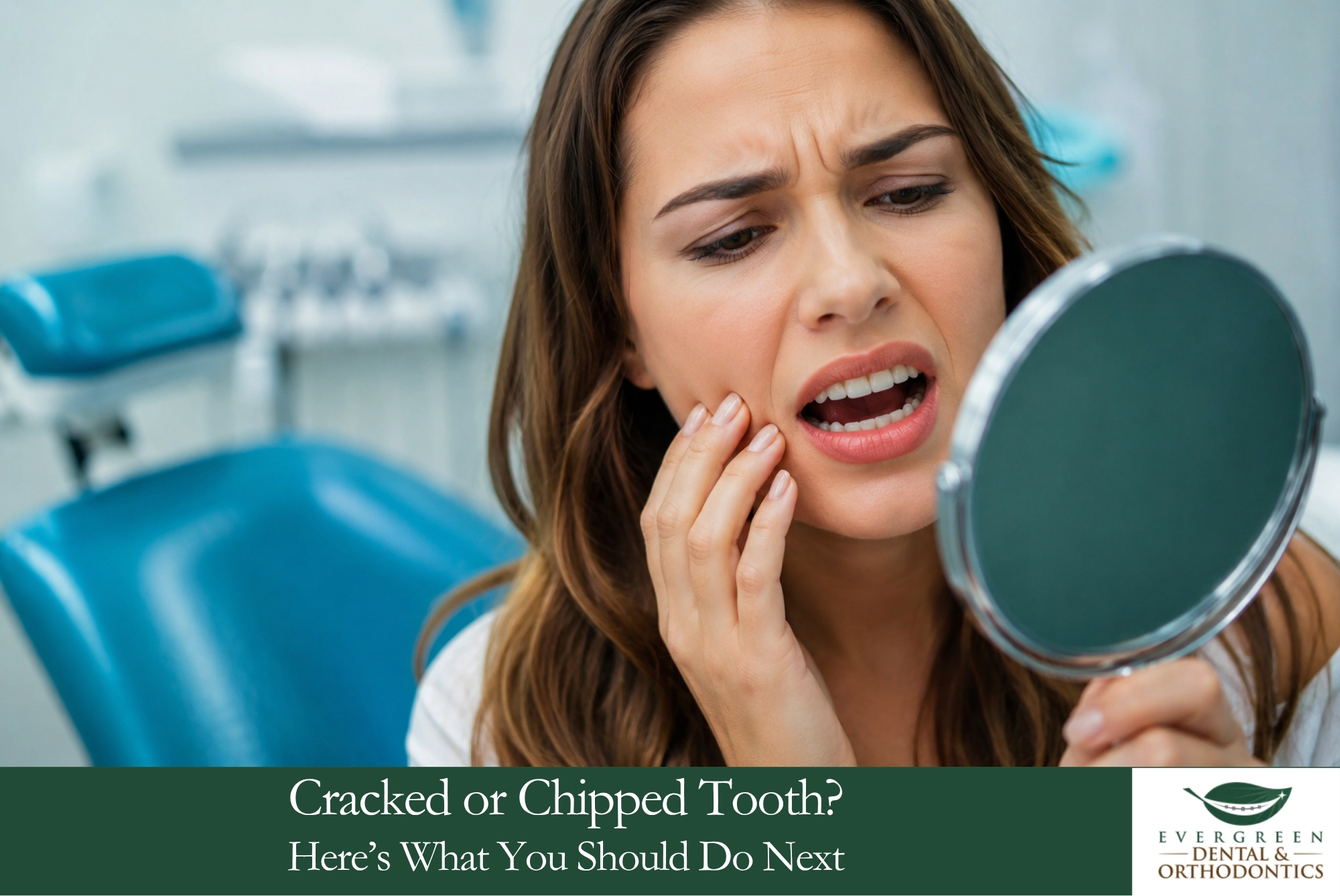
 A cracked or chipped tooth can happen unexpectedly. You might bite down on a hard piece of food, experience a sports injury, grind your teeth at night, or simply notice that a tooth suddenly feels different. While some chips are primarily cosmetic, other tooth fractures can expose or irritate the inner structures of the tooth and require prompt dental care.
If you have a cracked or chipped tooth, the most important step is to avoid making the damage worse and schedule a dental evaluation. At Evergreen Dental & Orthodontics in Encino, CA, patients can receive an examination to determine the extent of the damage and discuss treatment options designed to protect the tooth, restore function, and improve its appearance.
This guide explains what to do after cracking or chipping a tooth, which symptoms deserve urgent attention, how dentists diagnose dental fractures, and the treatments that may be recommended.
What Is the Difference Between a Cracked and Chipped Tooth?
Although the terms are sometimes used interchangeably, a chipped tooth and a cracked tooth are not necessarily the same dental problem.
A chip usually occurs when a small portion of the tooth’s outer structure breaks away. Minor chips may involve only the enamel and cause little or no discomfort.
A crack is a line or fracture that extends through some portion of the tooth. Cracks vary significantly in depth and severity. Some remain superficial, while others may extend toward the pulp—the central area of the tooth containing nerves and blood vessels—or below the gumline.
Because it can be difficult to determine the depth of a fracture by looking at the tooth yourself, professional evaluation is important even when the visible damage appears small.
What Should You Do Immediately After Cracking or Chipping a Tooth?
Knowing what to do during the first few hours after damaging a tooth may help reduce discomfort and prevent additional injury.
Rinse Your Mouth Gently
Rinse your mouth with warm water to help remove food particles and debris from around the damaged tooth. Avoid aggressive rinsing if the area is painful or bleeding.
Save Any Broken Pieces
If you can locate a piece of the tooth that has broken off, place it in a clean container and bring it to your dental appointment. Your dentist can evaluate the fragment and determine whether it has any relevance to treatment.
Protect the Tooth From Further Damage
Avoid chewing on the affected side of your mouth until the tooth has been examined. Hard, crunchy, sticky, and very chewy foods can place additional pressure on a weakened tooth.
Be Careful With Sharp Edges
A chipped tooth may leave a rough or sharp surface capable of irritating your tongue, cheek, or lip. Dental wax can sometimes provide a temporary barrier until you receive professional care.
Apply a Cold Compress if Swelling Develops
If an injury has caused facial swelling, a cold compress applied externally to the cheek may help manage swelling and discomfort. Avoid placing ice directly against the tooth or gum tissue.
Contact a Dentist
Even if the tooth does not hurt, schedule a dental examination. Pain is not a reliable indicator of how serious a crack or fracture may be.
When Is a Cracked or Chipped Tooth a Dental Emergency?
Not every small chip requires emergency treatment, but certain symptoms warrant prompt attention.
Severe or Persistent Tooth Pain
Significant pain can indicate that the fracture has affected deeper portions of the tooth. Pain that continues, worsens, or interferes with normal activities should be evaluated promptly.
Pain When Biting or Releasing Your Bite
Cracked teeth can sometimes cause a distinctive sharp sensation when biting or when pressure is released. Because cracks are not always easy to see, this symptom can be an important diagnostic clue.
Significant Bleeding or Trauma
If the tooth was damaged during an accident and there is substantial bleeding, facial trauma, or injury to surrounding tissues, seek prompt professional care.
Swelling Around the Tooth or Face
Swelling, particularly when accompanied by worsening pain, fever, drainage, or a bad taste in the mouth, may indicate infection and should not be ignored.
A Tooth That Feels Loose
A loose permanent tooth following an injury requires prompt evaluation. Damage may involve the tooth itself, its root, or the tissues and bone supporting it.
A Large Portion of the Tooth Has Broken Off
Extensive fractures can expose sensitive internal tooth structures and make the remaining tooth more vulnerable to additional damage.
Why Do Teeth Crack or Chip?
Teeth are strong, but they are not indestructible. Dental fractures can occur for many reasons.
Biting Hard Foods or Objects
Ice, hard candy, popcorn kernels, fruit pits, and other hard substances can create enough force to damage enamel or an already weakened tooth. Chewing pens or using your teeth to open packages can also increase the risk of injury.
Sports and Accidents
Falls, collisions, sports injuries, and other forms of facial trauma are common causes of chipped and fractured teeth.
Teeth Grinding and Clenching
Chronic grinding or clenching, also known as bruxism, repeatedly places substantial pressure on teeth. Over time, this stress may contribute to enamel wear and dental fractures.
Large Fillings or Previous Dental Work
A tooth with a large restoration may have less natural tooth structure remaining. Depending on its condition and the forces placed on it, it may be more susceptible to fracture.
Tooth Decay
Decay weakens tooth structure. A tooth affected by a large cavity can become more likely to break under normal chewing pressure.
Normal Wear Over Time
Years of biting and chewing can gradually affect enamel and tooth structure. Existing microscopic cracks may become more significant over time.
Can a Cracked Tooth Heal on Its Own?
Unlike bone, tooth enamel does not regenerate and a structural crack in a tooth does not heal itself.
A very small enamel imperfection may remain stable, but a true dental crack can potentially progress as the tooth continues to experience biting forces. Treatment is therefore focused on stabilizing and protecting the tooth rather than waiting for the fracture to repair itself.
Early diagnosis may provide more options for preserving natural tooth structure.
How Does a Dentist Diagnose a Cracked Tooth?
Diagnosing a cracked tooth can sometimes be challenging because fractures may be extremely small or located in areas that are difficult to see.
Visual Examination
Your dentist may inspect the tooth under magnification and look for visible fracture lines, damaged enamel, defective restorations, or other signs of structural weakness.
Bite Testing
Controlled pressure may be applied to different parts of the tooth to identify whether biting or releasing pressure produces characteristic discomfort.
Dental X-Rays
X-rays can help evaluate the tooth’s roots, surrounding bone, existing restorations, decay, and other potential causes of symptoms. However, some cracks are too small or positioned in a way that makes them difficult to see directly on an X-ray.
Pulp Testing
Temperature or other diagnostic tests may be used to determine how the nerve inside the tooth is responding.
Gum Examination
The dentist may examine the gums around the tooth. An unusually deep isolated periodontal pocket can sometimes be associated with a fracture extending below the gumline.
How Are Cracked and Chipped Teeth Treated?
Treatment depends on the location and severity of the damage, the amount of healthy tooth structure remaining, whether the pulp is affected, and the overall condition of the tooth.
Dental Bonding
Small chips may sometimes be repaired with tooth-colored composite resin. Bonding can restore missing tooth structure, smooth rough edges, and improve appearance.
Dental Veneers
For certain cosmetic chips or fractures involving front teeth, a veneer may be considered. Veneers cover the visible front surface of a tooth and can improve its shape, size, and appearance.
Dental Crowns
A dental crown covers and reinforces a damaged tooth. Crowns may be recommended when a significant portion of the tooth has fractured or when the remaining structure needs additional protection from chewing forces.
Root Canal Treatment
If a fracture or injury damages or infects the dental pulp, root canal treatment may be necessary. The affected pulp is removed, the internal space is cleaned and sealed, and the tooth is typically restored to protect its remaining structure.
Tooth Extraction
Some severely fractured teeth cannot be predictably restored, particularly when a fracture extends deeply below the gumline or compromises the root. In these cases, extraction may be recommended.
If removal becomes necessary, your dentist can discuss appropriate tooth-replacement options based on your individual needs.
What Happens If You Ignore a Cracked Tooth?
A cracked tooth may initially cause only occasional sensitivity or discomfort. However, leaving a significant fracture untreated can allow the crack to progress or permit bacteria to reach deeper areas of the tooth.
Possible complications include increasing sensitivity, pain when chewing, inflammation of the dental pulp, infection, additional structural damage, and eventual tooth loss.
Seeking an evaluation sooner can help determine whether the tooth can be stabilized before the damage becomes more extensive.
Can You Eat With a Cracked or Chipped Tooth?
You may be able to eat while waiting for your appointment, but you should minimize pressure on the damaged tooth.
Choose Softer Foods
Foods that require minimal chewing can reduce stress on the affected area. Avoid foods that are especially hard, crunchy, or sticky.
Chew on the Opposite Side
Whenever practical, use the unaffected side of your mouth for chewing until your dentist has evaluated the damaged tooth.
Avoid Extreme Temperatures
A damaged tooth may become sensitive to very hot or cold foods and beverages. Choosing moderate temperatures may be more comfortable.
How Can You Help Prevent Cracked and Chipped Teeth?
Not every dental injury is preventable, but certain habits can reduce your risk.
Do Not Chew Ice or Hard Objects
Avoid chewing ice, pens, fingernails, hard candies, and other objects that can place excessive force on your teeth.
Wear a Mouthguard During Sports
A properly fitted athletic mouthguard can help protect the teeth and surrounding oral structures during contact sports and other activities where facial injuries are possible.
Address Teeth Grinding
If you frequently clench or grind your teeth, discuss it with your dentist. Depending on the cause and your oral health, a custom nightguard or another treatment strategy may be appropriate.
Maintain Regular Dental Examinations
Routine dental visits allow your dentist to identify decay, worn restorations, weakened teeth, and other problems that may increase fracture risk.
Never Use Your Teeth as Tools
Using your teeth to open packaging, cut materials, or remove bottle caps exposes them to forces they were not designed to withstand.
Why Prompt Dental Care Matters
When a tooth cracks or chips, the visible damage may represent only part of the problem. A seemingly minor fracture can sometimes extend deeper than expected.
Professional evaluation allows a dentist to determine which structures are involved, assess the health of the tooth’s pulp and supporting tissues, and recommend an appropriate restoration.
If you have damaged a tooth in Encino or the surrounding area, Evergreen Dental & Orthodontics can evaluate the problem and discuss treatment options based on the extent of the injury and your individual oral health needs.
Frequently Asked Questions About Cracked and Chipped Teeth
Is a Chipped Tooth Always an Emergency?
No. A very small enamel chip without pain may not require emergency treatment. However, you should still schedule a dental examination because the extent of the damage cannot always be determined by appearance alone. Large fractures, severe pain, swelling, bleeding, or trauma should receive more immediate attention.
How Do I Know if My Tooth Is Cracked?
Possible signs include pain when chewing, sensitivity to hot or cold temperatures, intermittent discomfort, or a sensation that something feels different when you bite. Some cracks cause few symptoms and are discovered during a dental examination.
Can a Dentist Fix a Chipped Tooth in One Visit?
Some minor chips may be repaired with dental bonding during a single appointment. More extensive damage may require additional treatment or laboratory-fabricated restorations. Your dentist can provide a treatment timeline after evaluating the tooth.
Does a Cracked Tooth Always Need a Crown?
No. Treatment depends on the type, location, and extent of the crack. Minor damage may require less extensive treatment, while structurally weakened teeth may benefit from a crown. An examination is necessary to determine the appropriate option.
Does a Cracked Tooth Always Need a Root Canal?
No. Root canal treatment is generally considered when the dental pulp has become irreversibly inflamed, damaged, or infected. A crack that has not significantly affected the pulp may be treated differently.
Can a Small Tooth Chip Get Worse?
Yes. Depending on its location and the forces placed on the tooth, a small area of damage can potentially become larger. Avoid chewing hard substances with the affected tooth and have it evaluated.
Why Does My Cracked Tooth Hurt When I Bite?
Biting places pressure on the tooth and can cause movement around a fracture. This may irritate the pulp or surrounding tissues and produce sharp or intermittent pain. A dentist should evaluate recurring pain during chewing.
What Should I Do if My Tooth Cracks but Does Not Hurt?
Schedule a dental examination. The absence of pain does not necessarily mean that the fracture is harmless. Early evaluation can determine whether monitoring, smoothing, bonding, or another treatment is appropriate.
Can a Cracked Tooth Become Infected?
Yes. If a crack allows bacteria to reach the dental pulp, inflammation and infection can develop. Increasing pain, swelling, drainage, fever, or a persistent unpleasant taste should receive prompt attention.
Can a Broken Piece of Tooth Be Reattached?
In certain circumstances, a dentist may be able to use a tooth fragment as part of treatment, but this depends on the nature of the fracture and condition of the fragment. Save any piece you find and bring it to your appointment.
Is Tooth Sensitivity After a Chip Normal?
Sensitivity can occur when a chip exposes deeper tooth structure. Persistent or significant sensitivity should be evaluated because it may indicate more extensive damage than is visible.
What Happens if a Tooth Cracks Below the Gumline?
Cracks extending significantly below the gumline or into the root can be more difficult to restore. Whether the tooth can be saved depends on the fracture’s location, depth, and overall condition. Your dentist will evaluate its restorability and discuss available options.
Should I Go to the Dentist if I Only Have a Tiny Chip?
Yes. Even if treatment is not urgently required, an examination can determine whether the chip is limited to enamel or associated with a larger structural issue. The dentist may also be able to smooth or restore a rough edge.
How Quickly Should I See a Dentist for a Cracked Tooth?
Arrange an evaluation as soon as reasonably possible. Severe pain, significant swelling, facial trauma, uncontrolled bleeding, or a loose or extensively broken permanent tooth warrants more urgent care.
Can I Prevent My Tooth From Cracking Again?
Risk can often be reduced by avoiding ice and other hard objects, wearing an appropriate mouthguard during sports, addressing teeth grinding or clenching, maintaining good oral hygiene, treating decay, and attending regular dental examinations.
Schedule an Evaluation at Evergreen Dental & Orthodontics
A cracked or chipped tooth should not be diagnosed based on appearance alone. The depth of a fracture, condition of the dental pulp, amount of healthy tooth structure remaining, and location of the damage all influence which treatment is appropriate.
If you have chipped, cracked, or otherwise damaged a tooth, contact Evergreen Dental & Orthodontics in Encino, CA, to request an appointment. A professional dental evaluation can identify the extent of the damage and help determine the appropriate next steps for protecting your oral health.
Contact Information
Evergreen Dental & Orthodontics
17130 Ventura Blvd Suite 150
Encino, CA 91316
Phone: (818) 357-2255
Website: evergreendentals.com
Request An Appointment: evergreendentals.com/appointments/