
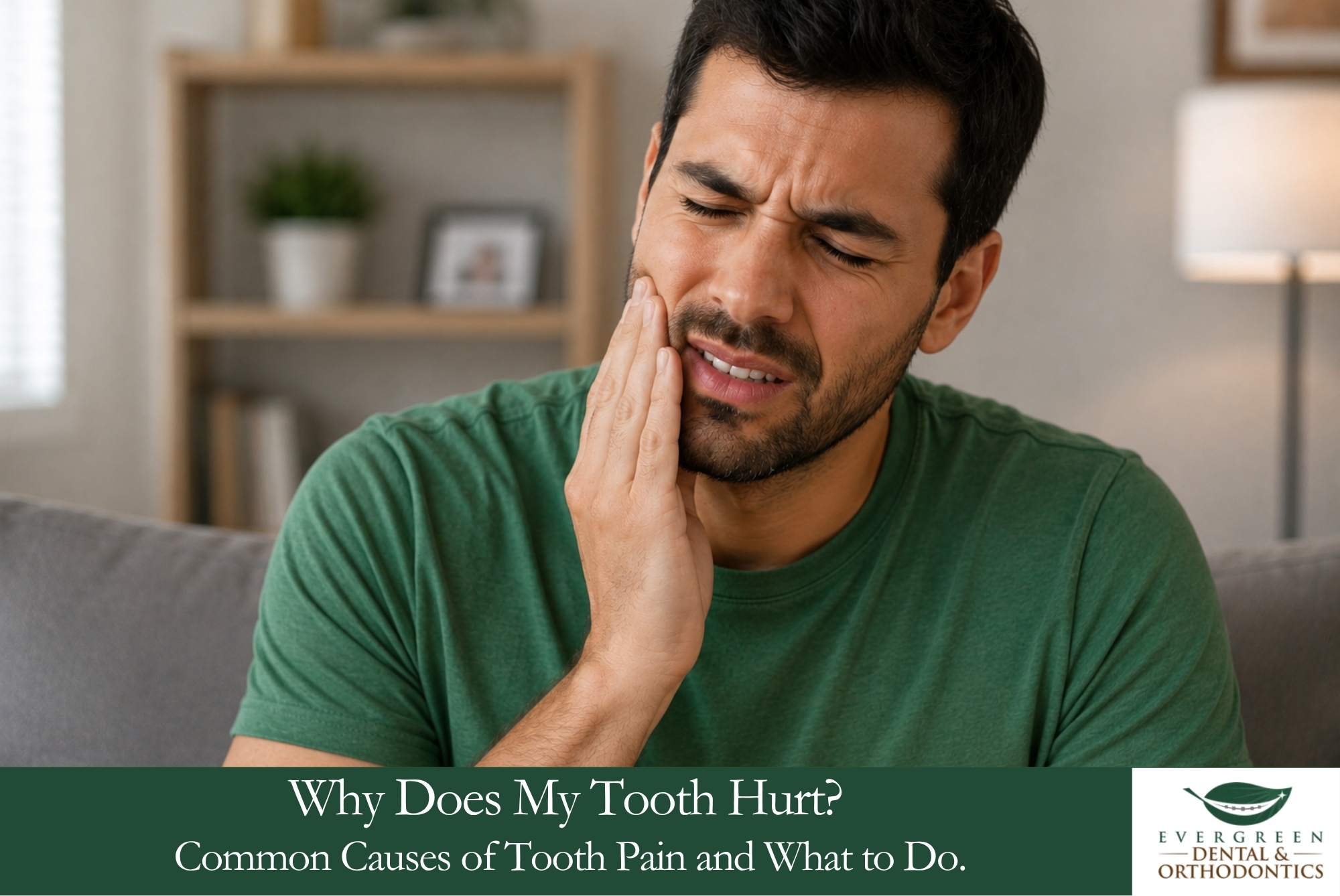
Tooth pain can range from a brief twinge when drinking something cold to a persistent, throbbing ache that makes it difficult to eat, sleep, or concentrate. While some tooth sensitivity may be temporary, ongoing or severe dental pain can be a sign that a tooth, the surrounding gums, or another part of the mouth needs professional attention.
At Evergreen Dental & Orthodontics in Encino, CA, we understand that figuring out why a tooth hurts can be stressful. The important thing to remember is that tooth pain is a symptom, not a diagnosis. Cavities, cracked teeth, gum problems, infections, teeth grinding, and several other conditions can cause similar discomfort.
Knowing the common causes of tooth pain—and when to contact a dentist—can help you make an informed decision about your oral health.
What Is Tooth Pain?
Tooth pain, also called a toothache, refers to pain or discomfort involving a tooth or the tissues around it. Depending on the underlying cause, it may feel sharp, dull, throbbing, aching, or sensitive.
Some people experience pain only when biting or consuming hot, cold, or sweet foods. Others may have continuous discomfort or pain that seems to spread into the jaw, face, ear, or surrounding teeth.
The type and location of the pain can provide useful clues, but symptoms alone are not always enough to determine the cause. A dental examination, and sometimes dental X-rays or other diagnostic tests, may be necessary.
Common Causes of Tooth Pain
Tooth Decay and Cavities
Tooth decay is one of the most common reasons a tooth may begin to hurt. Decay develops when acids produced by oral bacteria contribute to the breakdown of tooth enamel.
Early cavities may cause few or no noticeable symptoms. As decay progresses into deeper portions of the tooth, however, sensitivity or pain can develop. You may notice discomfort when eating sweets or consuming hot or cold foods and beverages.
Untreated decay can eventually reach the tooth’s pulp, where nerves and blood vessels are located, potentially resulting in significant pain and infection.
Tooth Sensitivity
A quick, sharp sensation after drinking ice water or eating something hot does not necessarily mean you have a cavity. Tooth sensitivity can occur when enamel becomes worn or when gum recession exposes portions of the tooth’s root.
Common factors associated with sensitivity include aggressive brushing, gum recession, enamel erosion, tooth decay, cracked teeth, and certain dental procedures.
Because sensitivity and decay can produce similar symptoms, persistent or worsening sensitivity should be evaluated by a dentist.
Cracked or Fractured Teeth
A tooth can crack because of trauma, biting hard foods or objects, large restorations, teeth grinding, or gradual wear.
Cracks are not always easy to see. One characteristic symptom is pain when chewing or releasing a bite. Temperature sensitivity may also occur.
The appropriate treatment depends on the location, depth, and severity of the crack. Prompt evaluation is important because some cracks can progress over time.
Dental Abscess or Tooth Infection
An abscess is a collection of pus associated with a bacterial infection. Dental abscesses can develop around the root of a tooth or within the tissues surrounding it.
Possible symptoms include persistent or throbbing tooth pain, pain when chewing, sensitivity to temperature, swollen or tender gums, facial or jaw swelling, a bad taste in the mouth, or fever.
A suspected dental abscess requires prompt professional evaluation. Dental infections generally require treatment of their source rather than relying solely on pain medication.
Inflamed or Infected Dental Pulp
Inside each tooth is the dental pulp, which contains nerves, blood vessels, and connective tissue. Deep decay, cracks, repeated dental procedures, or trauma can irritate or damage the pulp.
Inflammation may initially cause sensitivity. When pulp damage becomes severe or irreversible, pain can become spontaneous, prolonged, or intense.
Depending on the condition of the tooth, treatment may include restorative care, root canal treatment, or, when a tooth cannot be predictably saved, extraction.
Gum Disease
Not all pain that feels like a toothache originates inside a tooth. Gingivitis and periodontitis affect the tissues surrounding and supporting the teeth.
Symptoms can include red, swollen, or tender gums; bleeding during brushing or flossing; gum recession; persistent bad breath; and, in more advanced cases, loose or shifting teeth.
Periodontal disease can progress with relatively little pain, which is one reason routine dental examinations remain important even when your mouth feels normal.
Food Trapped Between Teeth
A piece of food lodged between two teeth or beneath the gumline can create pressure and localized gum inflammation that may feel surprisingly similar to a toothache.
Gentle flossing may remove trapped material. Avoid attempting to remove debris with sharp objects, which can injure the gums or damage dental restorations.
If pain continues after the area has been cleaned, a dentist should evaluate it for decay, gum disease, or another underlying problem.
Teeth Grinding and Jaw Clenching
Bruxism is the habit of grinding or clenching the teeth, often during sleep. Repeated pressure can contribute to tooth sensitivity, worn enamel, chipped or cracked teeth, jaw soreness, headaches, and discomfort when chewing.
Because nighttime grinding can happen unconsciously, some patients do not realize they grind their teeth until a dentist identifies signs of wear.
A Loose or Damaged Filling or Crown
Dental restorations are designed to protect and restore teeth, but fillings and crowns can eventually become worn, damaged, loose, or fractured.
If a restoration no longer seals the tooth adequately, the underlying tooth may become sensitive or vulnerable to additional decay. Pain when chewing may also occur if a restoration is damaged or the bite has changed.
Wisdom Teeth
Wisdom teeth can cause discomfort when they are erupting, partially erupted, impacted, or difficult to clean.
Pain toward the back of the mouth may be accompanied by swollen gums, tenderness, difficulty opening the mouth, or an unpleasant taste.
A dental examination and appropriate imaging can help determine the position of wisdom teeth and whether treatment is necessary.
Dental Trauma
A fall, sports injury, automobile accident, or blow to the face can damage a tooth even when no obvious crack is visible.
Trauma may injure the tooth’s pulp, root, or supporting tissues. A tooth may also become loose, displaced, fractured, or knocked out.
Dental injuries should be assessed promptly, particularly when a permanent tooth has been displaced or knocked out.
Sinus Pressure
The roots of the upper back teeth are located near the maxillary sinuses. In some cases, sinus inflammation or pressure can create discomfort that feels as though it originates from the upper teeth.
Sinus-related discomfort may affect several upper teeth rather than one specific tooth and may occur alongside nasal congestion or facial pressure.
Because dental disease and sinus problems can produce overlapping symptoms, persistent tooth pain should not automatically be attributed to the sinuses.
What Different Types of Tooth Pain May Mean
Sharp Pain When Biting
Pain that occurs when biting or chewing may be associated with a cracked tooth, damaged restoration, decay, inflammation around the root, or another problem affecting the tooth or surrounding tissues.
A dentist can evaluate the bite and tooth structure to determine the likely cause.
Pain With Hot or Cold Foods
Brief temperature sensitivity can occur with exposed dentin or mild sensitivity. Pain that is intense or continues after the hot or cold stimulus has been removed may indicate deeper irritation within the tooth.
The duration and severity of sensitivity are useful details to share with your dentist.
Constant Throbbing Pain
Persistent, spontaneous, or throbbing pain can be associated with significant inflammation or infection and warrants timely dental evaluation.
Pain medication may temporarily reduce symptoms, but it does not necessarily address the underlying dental condition.
Pain When You Touch the Tooth
A tooth that is particularly tender to pressure or touch may have inflammation involving the tissues surrounding its root. Decay, infection, trauma, or excessive biting forces are among the possible causes.
Pain That Seems to Move
Dental pain can sometimes be “referred,” meaning the location where you feel discomfort may not be the actual source.
For example, pain from one tooth may seem to originate from a neighboring tooth, while jaw or sinus problems may occasionally mimic dental discomfort. Professional diagnosis is especially helpful when you cannot identify which tooth hurts.
What Should I Do When My Tooth Hurts?
Contact a Dentist
If tooth pain persists, returns repeatedly, becomes severe, or is accompanied by other symptoms, schedule a dental examination.
Early evaluation can help identify the source of the problem before it becomes more complicated.
Keep the Area Clean
Continue brushing gently and carefully floss around the painful tooth. Removing plaque and trapped food can reduce irritation, particularly when discomfort originates from the gums.
Avoid aggressive brushing or repeatedly touching a painful area.
Rinse With Warm Salt Water
A gentle warm saltwater rinse may help clean the mouth and temporarily soothe irritated oral tissues.
It should be considered supportive home care rather than a substitute for diagnosing and treating the cause of persistent tooth pain.
Avoid Foods That Trigger Pain
Until you can be evaluated, consider avoiding foods and beverages that worsen your symptoms. Extremely hot, cold, sugary, sticky, or hard foods can aggravate some types of dental pain.
Chewing on the opposite side of the mouth may also be more comfortable temporarily.
Use Over-the-Counter Medication Appropriately
Nonprescription pain relievers may temporarily help some people manage dental discomfort when used according to the product label and when medically appropriate for the individual.
Do not place aspirin or other pain medication directly against a tooth or gum tissue, as this can damage oral tissues. People who have medical conditions, take other medications, are pregnant, or are uncertain about which medication is appropriate should consult an appropriate healthcare professional.
When Is Tooth Pain a Dental Emergency?
Not every toothache requires emergency treatment, but certain symptoms deserve urgent attention.
Seek Prompt Dental Care for Severe or Worsening Pain
Severe pain, rapidly worsening symptoms, significant swelling, dental trauma, or signs of infection should be evaluated promptly.
Facial Swelling Can Be Serious
Swelling involving the gums, jaw, or face can be associated with a dental infection. Because infections can spread beyond the tooth, facial swelling should not be ignored.
Get Emergency Medical Help for Certain Symptoms
If swelling is affecting your ability to breathe or swallow, or if you develop other signs of a potentially serious or rapidly spreading infection, seek emergency medical attention rather than waiting for a routine dental appointment.
How Dentists Diagnose Tooth Pain
Dental Examination
Your dentist may examine the teeth, gums, restorations, bite, and surrounding tissues. You may be asked when the pain began, what triggers it, how long it lasts, and whether it wakes you from sleep.
These details can help distinguish among possible causes.
Dental X-Rays
Dental X-rays may reveal problems that are difficult or impossible to see during a visual examination, including decay between teeth, changes around tooth roots, bone loss, impacted teeth, and certain infections.
The type of imaging recommended depends on your symptoms and clinical findings.
Additional Diagnostic Tests
Depending on the situation, a dentist may perform tests involving temperature, biting pressure, percussion, palpation, or the tooth’s response to other stimuli.
The goal is to determine which tooth or tissue is responsible for the pain and whether the dental pulp remains healthy.
How Is Tooth Pain Treated?
Dental Fillings
When pain is caused by a cavity and the tooth remains restorable without significant pulp involvement, removing the decay and placing a filling may restore the damaged area.
Dental Crowns
A crown may be recommended when a tooth has substantial structural damage, a large existing restoration, or certain types of cracks.
Crowns cover and protect the remaining tooth structure, although whether a crown is appropriate depends on the specific diagnosis.
Root Canal Treatment
Root canal treatment may be recommended when the pulp inside a restorable tooth becomes irreversibly inflamed or infected.
During treatment, the affected pulp tissue is removed, the internal space is cleaned and disinfected, and the tooth is sealed. The tooth often requires an appropriate final restoration afterward.
Periodontal Treatment
If discomfort is related to gum disease, treatment may focus on controlling bacterial deposits and inflammation around the teeth.
The recommended approach depends on the type and severity of periodontal disease.
Tooth Extraction
When a tooth is severely damaged, fractured, infected, or otherwise cannot be predictably restored, extraction may be considered.
Your dentist can discuss appropriate tooth-replacement options when replacement is indicated.
Can Tooth Pain Go Away on Its Own?
Tooth pain can sometimes temporarily decrease, but an improvement in symptoms does not necessarily mean the underlying problem has resolved.
For example, irritation may settle after food is removed from between teeth. In other circumstances, however, pain can diminish even while disease remains present. A severely damaged tooth nerve may eventually stop producing the same pain despite continued infection.
For this reason, recurring or unexplained tooth pain should be professionally evaluated rather than judged solely by whether the discomfort temporarily disappears.
How Can I Reduce My Risk of Toothaches?
Maintain Consistent Oral Hygiene
Brush your teeth twice daily with fluoride toothpaste and clean between your teeth regularly. Good oral hygiene helps reduce plaque accumulation and the risk of tooth decay and gum disease.
Schedule Regular Dental Visits
Routine dental examinations allow dentists to identify some problems before they cause noticeable pain. The appropriate frequency of dental visits depends on your individual oral health and risk factors.
Limit Frequent Sugar Exposure
Oral bacteria metabolize certain carbohydrates and produce acids that contribute to tooth decay. Reducing frequent exposure to sugary foods and drinks can help lower cavity risk.
Protect Your Teeth From Injury
If you participate in activities with a risk of dental trauma, an appropriate mouthguard can help protect your teeth and oral tissues.
If you grind or clench your teeth, discuss the symptoms with your dentist to determine whether additional evaluation or a protective appliance may be appropriate.
Why Early Evaluation of Tooth Pain Matters
Dental pain is the body’s way of signaling that something may need attention. Because several dental conditions can produce similar symptoms, identifying the actual cause is more important than simply masking the discomfort.
Early diagnosis may allow for more conservative treatment in some situations. Waiting until pain becomes severe can allow decay, fractures, periodontal problems, or infections to progress.
If you have persistent, recurring, or unexplained tooth pain, Evergreen Dental & Orthodontics can evaluate your symptoms, identify the likely source of the discomfort, and discuss appropriate treatment options.
Frequently Asked Questions About Tooth Pain
Why does my tooth hurt all of a sudden?
Sudden tooth pain can have several possible causes, including tooth decay, a crack or fracture, a damaged restoration, pulp inflammation, infection, gum irritation, or trauma. A dental examination is the most reliable way to identify the cause.
Why does my tooth hurt when I bite down?
Pain when biting can occur with a cracked tooth, inflamed tissues around a tooth root, decay, a damaged restoration, or bite-related problems. Because cracks can sometimes be difficult to see, persistent biting pain should be evaluated.
Why does my tooth hurt when I drink cold water?
Cold sensitivity may result from exposed dentin, gum recession, worn enamel, cavities, cracks, or inflammation inside the tooth. Brief sensitivity and lingering pain can have different implications, so tell your dentist how long the sensation lasts.
Why does my tooth hurt when I eat something sweet?
Sensitivity to sweets can occur when decay or exposed dentin allows stimuli to reach more sensitive portions of the tooth. A dental examination can determine whether a cavity or another condition is present.
Why does my tooth hurt at night?
Tooth pain may feel more noticeable at night because there are fewer distractions, and lying down can sometimes change the perception of pressure or discomfort. Persistent nighttime tooth pain warrants dental evaluation, particularly when it is spontaneous or severe.
Can a cavity cause severe tooth pain?
Yes. Early cavities may cause no symptoms, but deeper decay can irritate or infect the dental pulp and result in significant pain.
Does a toothache always mean I need a root canal?
No. Toothaches have many possible causes, and root canal treatment is appropriate only for certain conditions involving the dental pulp. Other cases may require a filling, crown, periodontal care, adjustment, extraction, or another treatment.
Can gum disease make my teeth hurt?
Yes. Inflamed or infected tissues around the teeth can cause tenderness and discomfort. Advanced periodontal disease may also affect the supporting structures around teeth.
Can teeth grinding cause tooth pain?
Yes. Grinding and clenching can place substantial force on the teeth and may contribute to sensitivity, worn enamel, fractures, jaw discomfort, and headaches.
Can sinus problems cause tooth pain?
Yes. Sinus pressure can sometimes be perceived as discomfort in the upper back teeth because of their proximity to the maxillary sinuses. However, dental disease can cause similar symptoms, so persistent pain should be evaluated.
What does an infected tooth feel like?
Symptoms vary, but an infected tooth may cause persistent or throbbing pain, tenderness when chewing, temperature sensitivity, gum swelling, facial swelling, an unpleasant taste, or fever. Not every infection causes all of these symptoms.
Will antibiotics cure my toothache?
Not necessarily. Many toothaches are not caused by conditions for which antibiotics are appropriate. Even when antibiotics are indicated for a dental infection, definitive dental treatment may still be necessary to address the source. Antibiotic use should be determined by a qualified healthcare professional.
What happens if I ignore tooth pain?
The outcome depends on the cause. Some minor irritation may resolve, while untreated decay, cracks, gum disease, or infection may progress. Because symptoms do not reliably indicate how advanced a problem is, persistent tooth pain should be assessed by a dentist.
How long should I wait before seeing a dentist for a toothache?
Severe, persistent, recurrent, or worsening pain should be evaluated promptly. You should also seek timely care when pain is accompanied by swelling, fever, trauma, difficulty chewing, or other concerning symptoms.
Is facial swelling from a toothache an emergency?
Facial or jaw swelling associated with dental pain can indicate infection and deserves prompt professional attention. If swelling interferes with breathing or swallowing, seek emergency medical care.
Can a cracked tooth heal by itself?
Unlike bone, a cracked tooth does not biologically fuse back together. The appropriate management depends on the location and extent of the crack, so early evaluation is recommended.
What can I do for tooth pain until my appointment?
Keep the area clean, gently floss around the affected tooth, avoid foods and temperatures that trigger pain, and consider an over-the-counter pain reliever if it is safe and appropriate for you. These measures may provide temporary relief but do not replace professional diagnosis.
Can I prevent tooth pain?
Not every toothache is preventable, but consistent brushing with fluoride toothpaste, cleaning between the teeth, regular dental examinations, limiting frequent sugar exposure, and protecting teeth from trauma can reduce the risk of several common causes.
Who should I contact for tooth pain in Encino, CA?
If you are experiencing tooth pain in Encino or the surrounding area, contact Evergreen Dental & Orthodontics at (818) 357-2255 to discuss your symptoms and request an appointment.
Schedule a Dental Evaluation for Tooth Pain in Encino, CA
A toothache can have many causes, and the severity of the pain does not always reveal the severity of the underlying problem. Rather than waiting for recurring or persistent discomfort to become worse, a professional dental evaluation can help determine what is happening and what treatment, if any, is appropriate.
Evergreen Dental & Orthodontics provides dental care in Encino, California. If you are experiencing tooth sensitivity, pain when chewing, persistent aching, swelling, or another dental concern, contact the office to request an evaluation.
Contact Information
Evergreen Dental & Orthodontics
17130 Ventura Blvd Suite 150
Encino, CA 91316
Phone: (818) 357-2255
Website: evergreendentals.com
Request An Appointment: evergreendentals.com/appointments/